Self-pay breast reduction: how it works and what it costs
Breast reduction is a major personal decision. This guide explains, in plain language, how self-pay breast reduction usually works, what recovery may involve, and typical cost ranges so you can plan carefully.
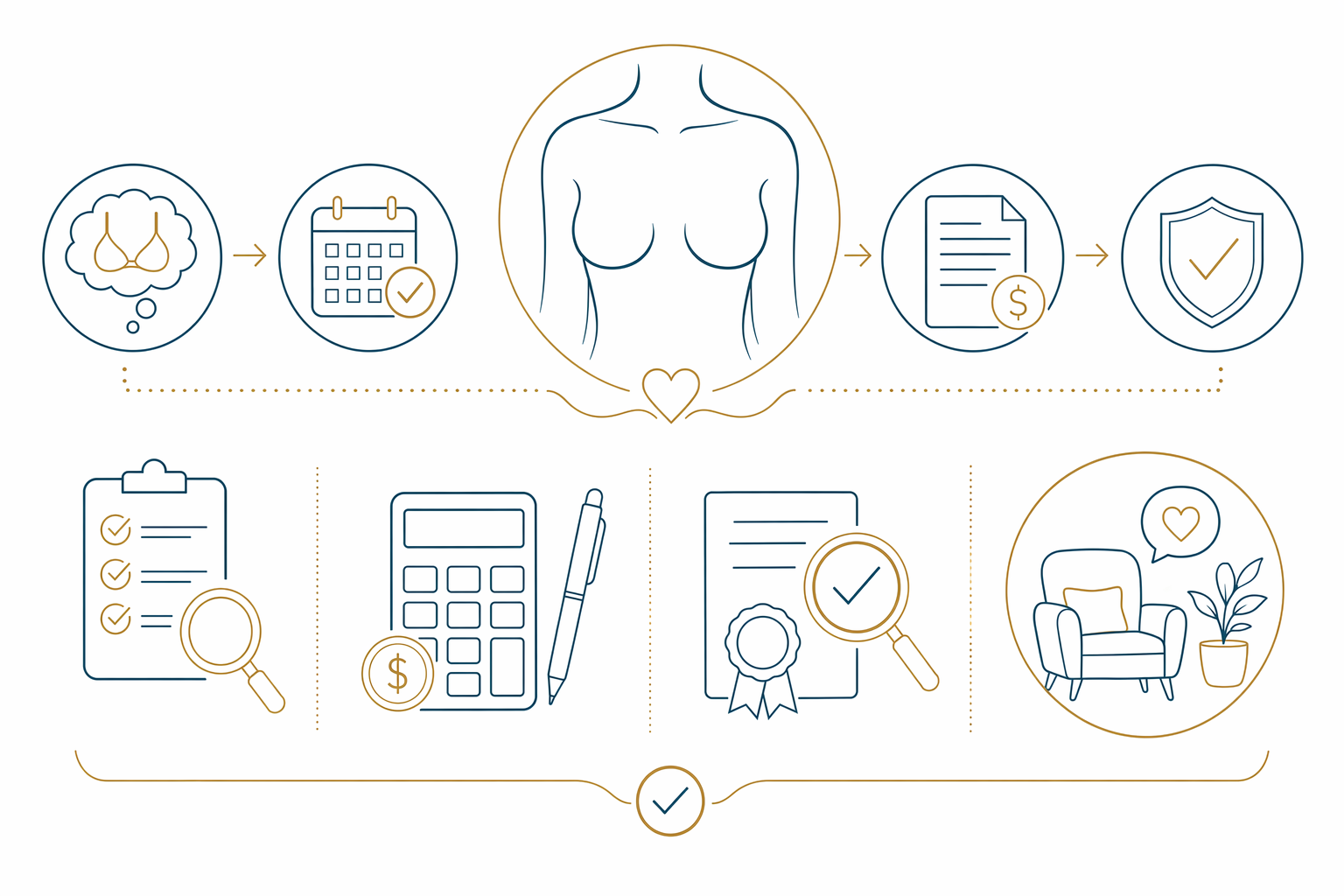
What self-pay breast reduction means
Breast reduction is a surgery that removes some breast tissue and skin to reduce size and reshape the breasts. Some people seek it for comfort, clothing fit, posture concerns, or personal appearance goals. Every person’s reasons are their own.
At ClariSurge, we share general educational information only. We are not a medical practice or healthcare provider, and we do not give medical advice. We focus only on self-pay elective procedures, which means surgery paid for out of pocket rather than through insurance.
If you want to explore your options, we can help you find a board-certified surgeon for a consultation. We collect contact details only, not your medical history or health records.
How the procedure usually works
Breast reduction is usually done in an accredited surgical facility or hospital setting by a surgeon, often with general anesthesia. The surgeon removes some breast tissue, fat, and skin, then reshapes the breast and repositions the nipple area when needed. The exact technique depends on your body, goals, and the surgeon’s approach.
A consultation is the time to ask how the surgeon plans the procedure, where incisions are commonly placed, what kind of anesthesia is used, and what the usual recovery timeline looks like in that practice. It is also the right time to ask what is included in the self-pay price.
Procedures vary from person to person. Only a qualified physician who examines you can tell you whether a procedure may be appropriate for your situation. You can review useful consultation questions before you book.
What recovery is really like
Recovery after breast reduction takes time. Many people need help at home for at least the first few days, and most need time away from work, childcare, lifting, or exercise. Swelling, soreness, tightness, and fatigue are common in the early period, but each recovery is different.
Your surgeon may give instructions about walking, sleeping position, bathing, driving, bras or support garments, and when you can return to normal activity. Follow the instructions from your own surgical team carefully, since they know the details of your procedure.
It can take several weeks before daily activities feel easier, and longer before swelling settles and the final shape becomes more stable. That does not mean anything is wrong. Recovery often happens in stages.
- Plan for time off work and lighter activity at first.
- Ask when you can lift children, exercise, drive, and sleep on your side.
- Confirm who to call after surgery if you have questions.
Typical self-pay cost range
Self-pay breast reduction can be a significant expense. In many US markets, total self-pay pricing often falls around $8,000 to $18,000 or more, depending on the surgeon, region, facility, anesthesia, complexity, and what is included. In some cities or practices, pricing may be outside that range.
The number you first see online may not be the full price. Ask for a written quote that clearly lists the surgeon’s fee, anesthesia, facility charges, implants or garments if relevant, lab work if required by the practice, medications, and follow-up visits. It is also smart to ask about revision policies, cancellation policies, and financing terms if offered by the practice.
You can read more about how self-pay prices are structured on our costs page. Before scheduling, always confirm the full self-pay price in writing.
How to choose a surgeon carefully
Credentials matter. Look for a surgeon who is board-certified in a relevant surgical specialty and who regularly performs the procedure you are considering. You should verify board certification yourself rather than relying only on ads, social media, or directory listings.
You can use our guide to check board certification. During the consultation, ask how often the surgeon performs breast reduction, where the surgery takes place, who provides anesthesia, what follow-up care is included, and how the practice handles concerns after surgery.
This is a big decision. Take your time. If anything feels rushed or unclear, it is reasonable to pause, ask more questions, or get another consultation.
How ClariSurge can help
ClariSurge is a free service that helps people understand self-pay elective procedures and connect with a board-certified surgeon for a consultation. We are not a surgeon or medical provider, and we do not diagnose, treat, or recommend a specific procedure for you.
If you want, you can get matched with a participating surgeon. We collect contact details only so a practice can follow up with you. We do not collect your medical history, diagnosis, or health records through this service.
Any medical decision should be made with a qualified physician after a proper consultation. Use the consultation to ask questions, review the written quote, and decide whether the plan feels right for you.
If you are thinking about paying out of pocket for breast reduction, learn the usual steps, ask for the full price in writing, verify board certification yourself, and make the final decision with a qualified physician.
Common questions
How much does self-pay breast reduction usually cost?
A typical self-pay range in the US is often about $8,000 to $18,000 or more, depending on the surgeon, location, facility, anesthesia, and what is included. Always ask for the full self-pay price in writing before you schedule.
Does ClariSurge help with insurance-covered breast reduction?
No. We focus only on self-pay elective procedures. If you are looking for insurance-covered or medically necessary surgery, that is outside our service.
How long is recovery after breast reduction?
Recovery varies, but many people need at least several days of support at home and some time away from work or regular activity. Your own surgeon is the right person to explain the expected timeline for your specific plan.
Will I have scars?
Breast reduction usually involves incisions, so scarring is an expected part of surgery. The pattern and visibility can vary, and a qualified surgeon can explain the common incision approaches and what they typically look like over time.
How do I know if a surgeon is really board-certified?
Verify it yourself using official board resources and the surgeon’s full name. Our [check board certification](/guides/check-board-certification/) guide walks through the process.
What information does ClariSurge collect?
We collect contact details only so we can help connect you with a participating surgeon for a consultation. We do not collect your medical history, diagnosis, or health records through this service.