Eyelid surgery (blepharoplasty): what to expect and what it costs
Eyelid surgery is a common self-pay cosmetic procedure, but it is still a real operation and a big decision. This guide explains, in plain language, how it usually works, what recovery may involve, and typical self-pay cost ranges.
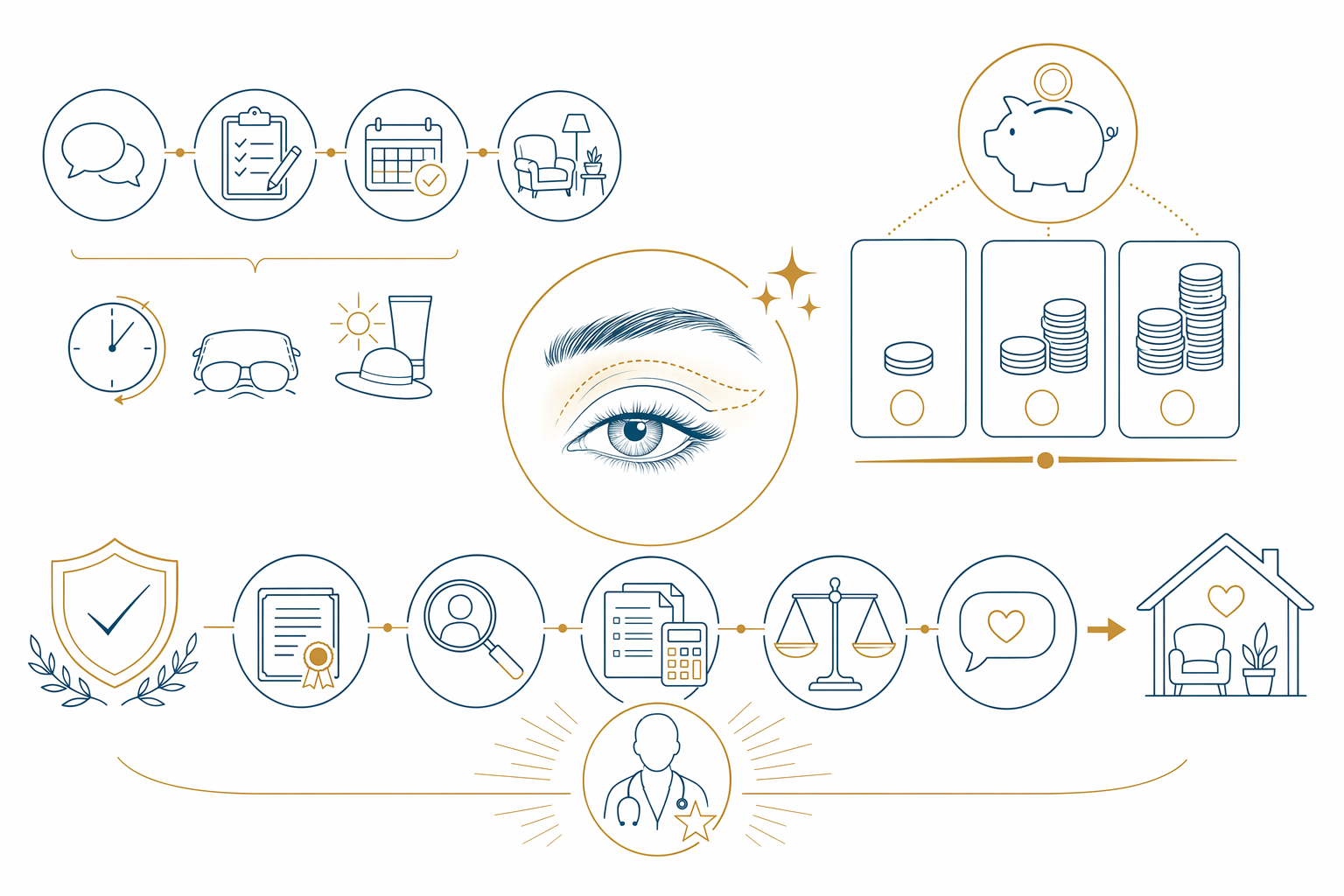
What eyelid surgery is
Blepharoplasty is surgery on the upper eyelids, lower eyelids, or both. People often look into it to address loose upper eyelid skin, puffiness, or under-eye bags. It is usually considered an elective cosmetic procedure when someone chooses to pay for it themselves.
The details depend on the person and the surgeon's approach. In general, upper eyelid surgery focuses on skin and sometimes underlying tissue above the eye. Lower eyelid surgery may address puffiness or changes below the eye.
This page is general education only. It is not medical advice. The right option, if any, is something to discuss with a qualified physician during a consultation.
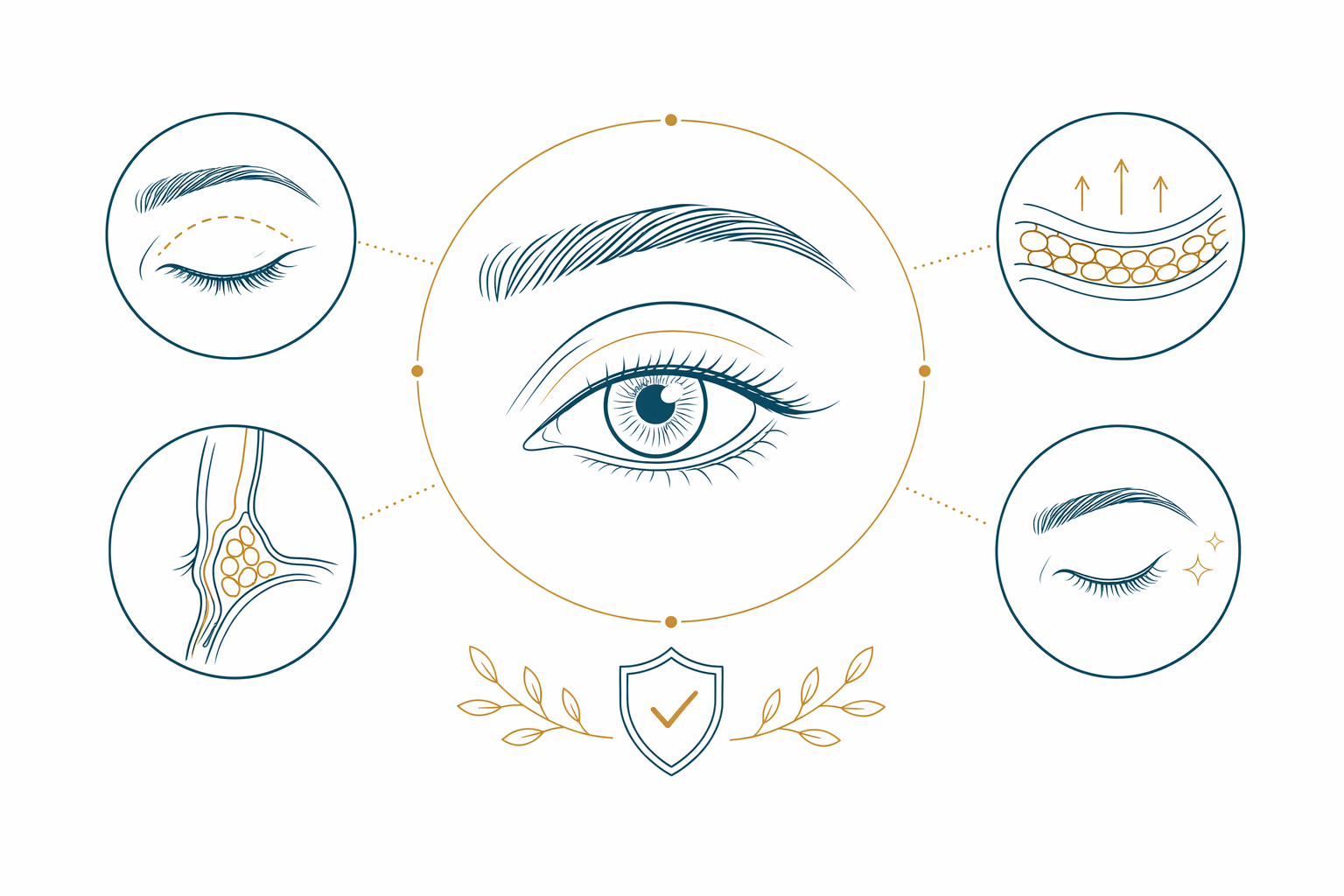
How the procedure usually works
A consultation is usually the first step. The surgeon examines the eyelid area, talks through your goals, and explains what may or may not be possible. They should also explain where incisions are commonly placed, what type of anesthesia or sedation may be used, and the main risks and tradeoffs.
Eyelid surgery is often done in an outpatient setting, which means you usually go home the same day. The exact technique varies. Upper eyelid surgery often uses an incision placed in the natural eyelid crease. Lower eyelid surgery may use an incision just below the lashes or inside the lower lid, depending on the plan.
Procedure time can vary, but many cosmetic eyelid surgeries take about 1 to 3 hours, depending on whether the upper lids, lower lids, or both are treated and whether other self-pay cosmetic procedures are done at the same time.
If you want help finding a board-certified surgeon for a cosmetic consultation, ClariSurge can connect you with one. Our service is free to you, and we collect contact details only, not medical history or health records.
Recovery: what people often experience
Recovery is usually measured in stages. In the first several days, people commonly expect swelling, bruising, tightness, and some temporary discomfort around the eyes. Your surgeon may give instructions about cold compresses, cleaning the area, sleeping with your head elevated, and when to return for follow-up.
Many people plan for social downtime. Some feel ready for routine activities within about 7 to 14 days, but visible swelling can last longer. Final settling may take weeks or months. Recovery is not the same for everyone.
Most surgeons will also give limits on exercise, lifting, bending, eye makeup, and contact lens use for a period of time. It is important to follow your surgeon's instructions closely and ask what is normal during healing versus what should prompt a call.
Because this is surgery near the eyes, ask very direct questions about recovery, risks, and aftercare. Our consultation questions guide can help you prepare.
Self-pay cost ranges
Self-pay cosmetic eyelid surgery costs vary a lot by city, surgeon experience, facility, anesthesia, and whether you are having upper lids, lower lids, or both. In many US markets, a typical self-pay range is about $3,000 to $8,000 for upper eyelid surgery alone, about $4,000 to $9,000 for lower eyelid surgery alone, and about $5,500 to $12,000 or more for upper and lower eyelid surgery together.
These are general ranges, not quotes. Some practices may be below or above them. A lower advertised price may not include all parts of the bill.
When comparing prices, ask for the full self-pay amount in writing. Confirm whether the quote includes the surgeon's fee, facility fee, anesthesia, pre-op visits, routine follow-up visits, medications, garments or supplies if any, and the policy for revision surgery or unexpected costs.
You can read more about comparing quotes on our costs page. Always confirm the final self-pay price in writing before you schedule.
How to choose a surgeon carefully
Board certification matters, but it is still important to verify it yourself. Ask which board the surgeon is certified by, then check the credentials directly. Our guide on how to check board certification walks through the process.
It is also reasonable to ask how often the surgeon performs cosmetic eyelid surgery, where the procedure would take place, who would provide anesthesia, what the recovery plan is, and how the practice handles questions after surgery. Clear answers and clear pricing are good signs.
ClariSurge is not a medical practice and does not provide medical advice or treatment. We offer general educational information and help people looking for self-pay elective cosmetic procedures find a board-certified surgeon for a consultation.
Eyelid surgery is a self-pay cosmetic procedure with real recovery time and widely varying prices, so compare written quotes carefully, verify board certification yourself, and make decisions with a qualified physician.
Common questions
How much does blepharoplasty usually cost if I pay myself?
A common self-pay range is about $3,000 to $8,000 for upper eyelids, $4,000 to $9,000 for lower eyelids, and $5,500 to $12,000 or more for both. The exact price depends on the surgeon, location, facility, anesthesia, and what is included in the quote.
Is eyelid surgery painful?
People often describe early recovery as more uncomfortable than painful, with swelling, bruising, and tightness. Experiences vary, so ask the surgeon what discomfort is typical and how they usually manage it.
How long is recovery after eyelid surgery?
Many people plan for about 1 to 2 weeks of visible recovery time, but swelling can last longer and final settling can take weeks or months. Your own timeline depends on the procedure and your surgeon's instructions.
Will insurance pay for eyelid surgery?
ClariSurge focuses only on self-pay elective cosmetic procedures. If you are exploring an insurance-covered or medically necessary situation, you would need to discuss that directly with a qualified physician and your insurer.
How do I know if a surgeon is really board-certified?
Ask the surgeon which board certifies them, then verify it yourself using the board's official resources. Our board certification guide can help you check carefully.
What does ClariSurge do?
We provide general educational information and help people in the US connect with a board-certified surgeon for a self-pay cosmetic consultation. Our service is free for readers, and we collect contact details only, not medical history or health records.