Facelift surgery: how it works, recovery, and self-pay cost
Thinking about a facelift can feel like a big step. This guide explains, in plain language, how facelift surgery is usually done, what recovery often involves, and typical self-pay cost ranges in the US.
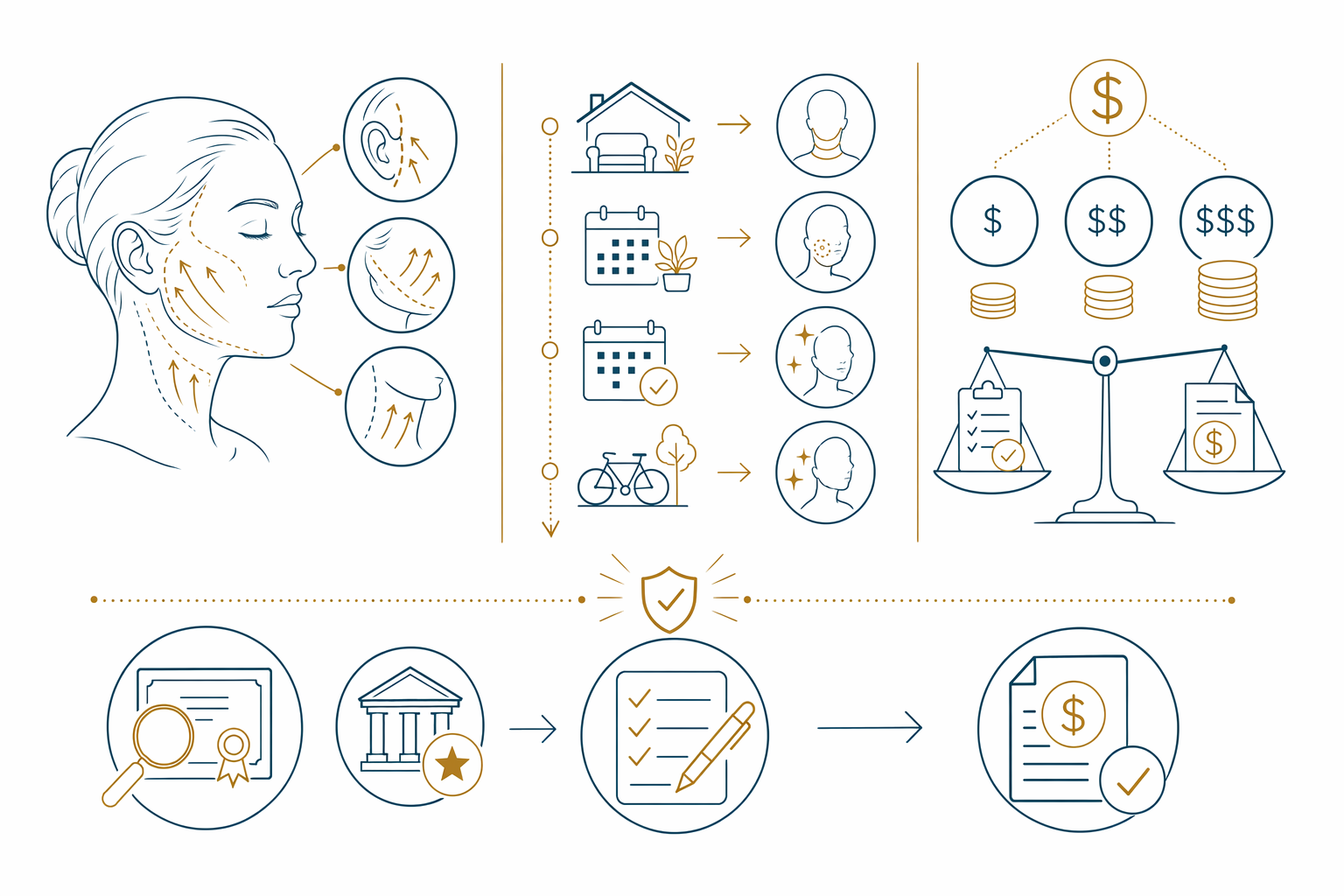
What a facelift is
A facelift, also called rhytidectomy, is an elective cosmetic surgery that aims to address visible facial aging, usually in the lower face and jawline. Some procedures also include the upper neck. People often consider it for skin laxity, deeper folds, jowls, or changes in facial contour that they feel are not improved enough by non-surgical treatments.
Facelift techniques vary. A surgeon may recommend a full facelift, a less extensive lift, or a facelift combined with another self-pay cosmetic procedure such as neck surgery, eyelid surgery, or fat transfer. The right approach depends on the surgeon's assessment, your goals, and your overall preferences.
This page is general education only. ClariSurge is not a medical practice and does not give medical advice. We help people looking for self-pay elective cosmetic care get connected with a board-certified surgeon for a consultation.
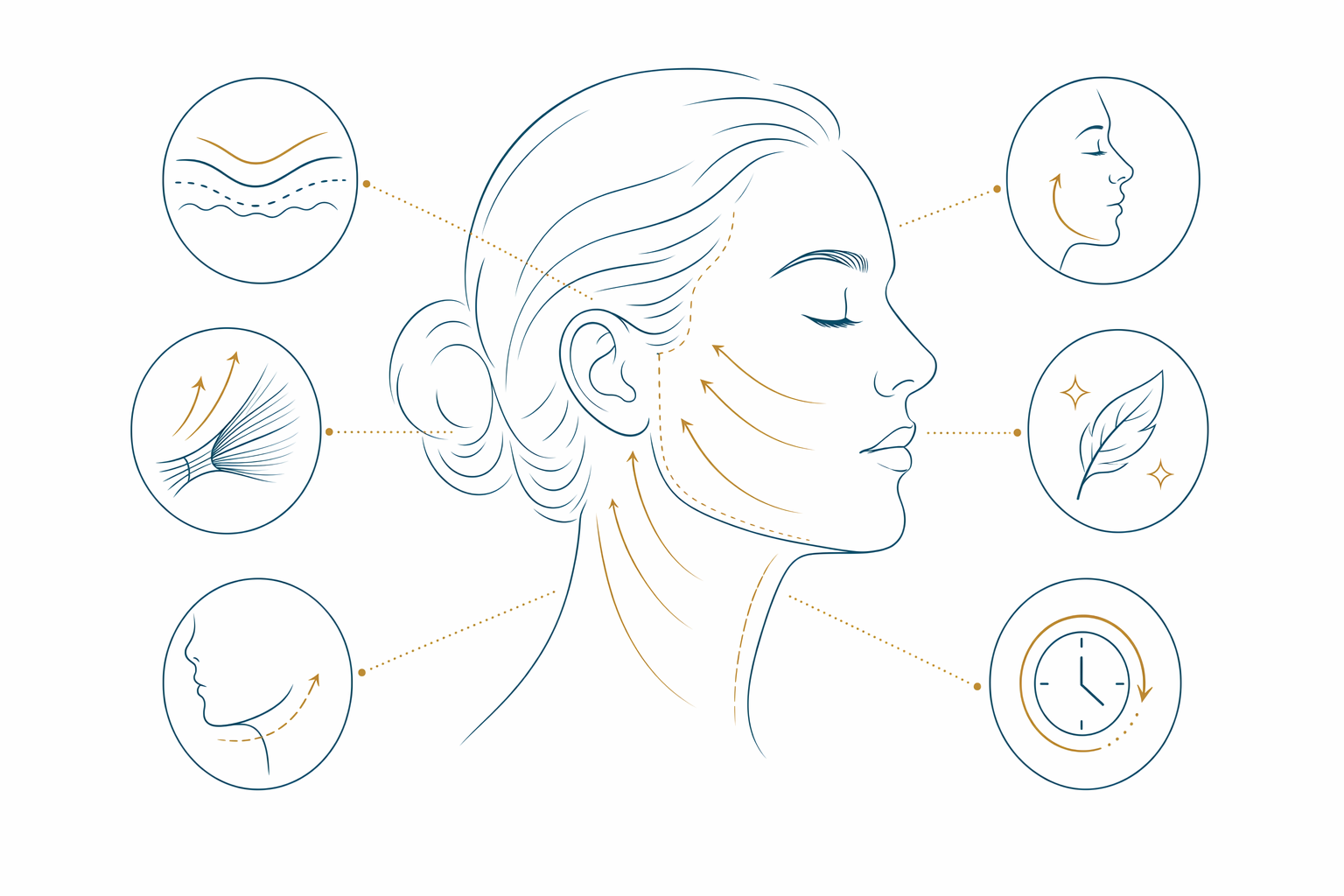
How the procedure usually works
A facelift is usually done in an accredited surgical facility or office-based surgical setting, depending on the surgeon and the plan. The procedure often uses anesthesia or sedation chosen by the operating team. Incision placement varies, but it is commonly around the ears and sometimes into the hairline, with the goal of allowing the surgeon to reposition deeper facial tissues and remove or redrape excess skin.
In many cases, the surgeon is not only tightening skin. Modern facelift methods often focus on deeper support layers beneath the skin, which can affect contour and longevity. Some surgeons also treat the neck area at the same time if that is part of the plan. The exact technique, length of surgery, and setting differ from practice to practice.
At your consultation, ask the surgeon to explain exactly what they include in the operation, what type of anesthesia is planned, where the procedure will take place, and what the first two weeks of recovery usually look like in their practice. You can use this list of helpful consultation questions.
Who may consider it, and what to think through first
People usually explore facelift surgery when they want a surgical option for age-related facial changes and are prepared for the cost, downtime, and recovery. It is a personal choice. There is no single "right" age, and surgeons differ in what they recommend.
It helps to be clear about your priorities before you schedule a consultation. For example, are you most concerned about the jawline, the neck, deeper folds, or overall facial balance? Are you open to combining procedures, or do you want to keep the surgery as limited as possible? Do you have time and support for recovery at home?
A consultation is the place to discuss whether a facelift is appropriate for you. Medical decisions should be made with a qualified physician who can review your health, examine you, and explain options and risks. ClariSurge does not collect medical history or health records. If you want help getting started, we only collect contact details so we can get you matched with a participating board-certified surgeon for a cosmetic consultation.
Recovery: what people often experience
Recovery after facelift surgery takes time. Many people have swelling, bruising, tightness, numbness, tenderness, and fatigue in the early period. These effects can improve in stages, not all at once. A surgeon may place dressings, suggest head elevation, and give instructions about bathing, activity, and follow-up visits.
Some people feel ready for light social activity after about two to three weeks, but that is only a general range. Others need more time. Residual swelling can last longer than many people expect, and sensation changes may also take time to settle. Strenuous exercise and heavy lifting are often restricted at first, based on the surgeon's instructions.
Before booking surgery, ask practical questions. When can you wash your hair? When can you drive? When can you return to desk work, travel, and exercise? Will you need someone to stay with you the first night? What is normal swelling in the first week, and when should you call the surgeon's office? Clear answers can help you plan realistically.
Self-pay facelift cost in the US
Facelift pricing can vary widely. In the US, a self-pay facelift often falls somewhere around $10,000 to $30,000 or more, depending on the surgeon's experience, the city, the complexity of the procedure, the facility, the anesthesia, and whether other cosmetic procedures are done at the same time. In some markets, limited procedures may be lower, while more extensive surgery can be higher.
The quoted price may or may not include everything. Ask for the full self-pay price in writing before you schedule. It should clearly state what is included, such as the surgeon's fee, anesthesia, facility fees, garments or dressings if applicable, follow-up care, and the policy for revisions or unexpected added costs.
If you are comparing quotes, compare the details, not just the total. A lower number may not include all facility or anesthesia costs. You can read more about comparing prices on our costs page.
How to find a qualified surgeon
Credentials matter. For a self-pay elective cosmetic procedure like facelift surgery, look carefully at the surgeon's training, board certification, and the setting where the operation is performed. Board certification is something you should verify yourself, directly, before moving forward.
Ask whether the surgeon is certified by a recognized surgical board relevant to the procedure, where they have hospital privileges if applicable, and whether the surgical facility is accredited. Also ask how often they perform facelift surgery and what recovery support their office provides.
ClariSurge is a free service that helps people in the US find and connect with a participating board-certified surgeon for a cosmetic consultation. We are not a provider, and we do not recommend one procedure over another. You can learn how to verify credentials on our board certification guide.
A facelift is an elective cosmetic surgery with meaningful downtime and widely varying self-pay costs, so verify the surgeon's board certification yourself and confirm the full written price before you decide.
Common questions
How much does a facelift usually cost if I am paying myself?
A typical US self-pay range is often about $10,000 to $30,000 or more, depending on the surgeon, location, facility, anesthesia, and whether other cosmetic procedures are added. Always ask for the full self-pay price in writing before scheduling.
How long is recovery after facelift surgery?
Recovery varies. Many people need at least a couple of weeks before they feel comfortable with light public activity, but swelling and healing can continue for longer. Your surgeon should give you a timeline based on your procedure.
Is a facelift only for older people?
Not necessarily. People consider facelift surgery at different ages for different reasons, based on facial changes, goals, and personal preference. A qualified surgeon can explain what options may be appropriate for you.
Does ClariSurge give medical advice or tell me if I should have surgery?
No. ClariSurge is not a medical provider and does not diagnose, treat, or give medical advice. We offer general educational information and help connect people seeking self-pay elective cosmetic consultations with a board-certified surgeon.
Do you need my medical history to match me?
No. We collect contact details only. We do not collect your medical history, diagnosis, or health records.
What if I want to use insurance?
ClariSurge focuses only on self-pay elective and cosmetic procedures. We do not help with insurance-covered or medically necessary surgery.