Liposuction: how body contouring works, recovery, and cost
Liposuction is a common self-pay cosmetic procedure for body contouring, but it is still a real surgery with costs, limits, and recovery time to plan for. This guide explains the basics in plain language so you can ask informed questions.
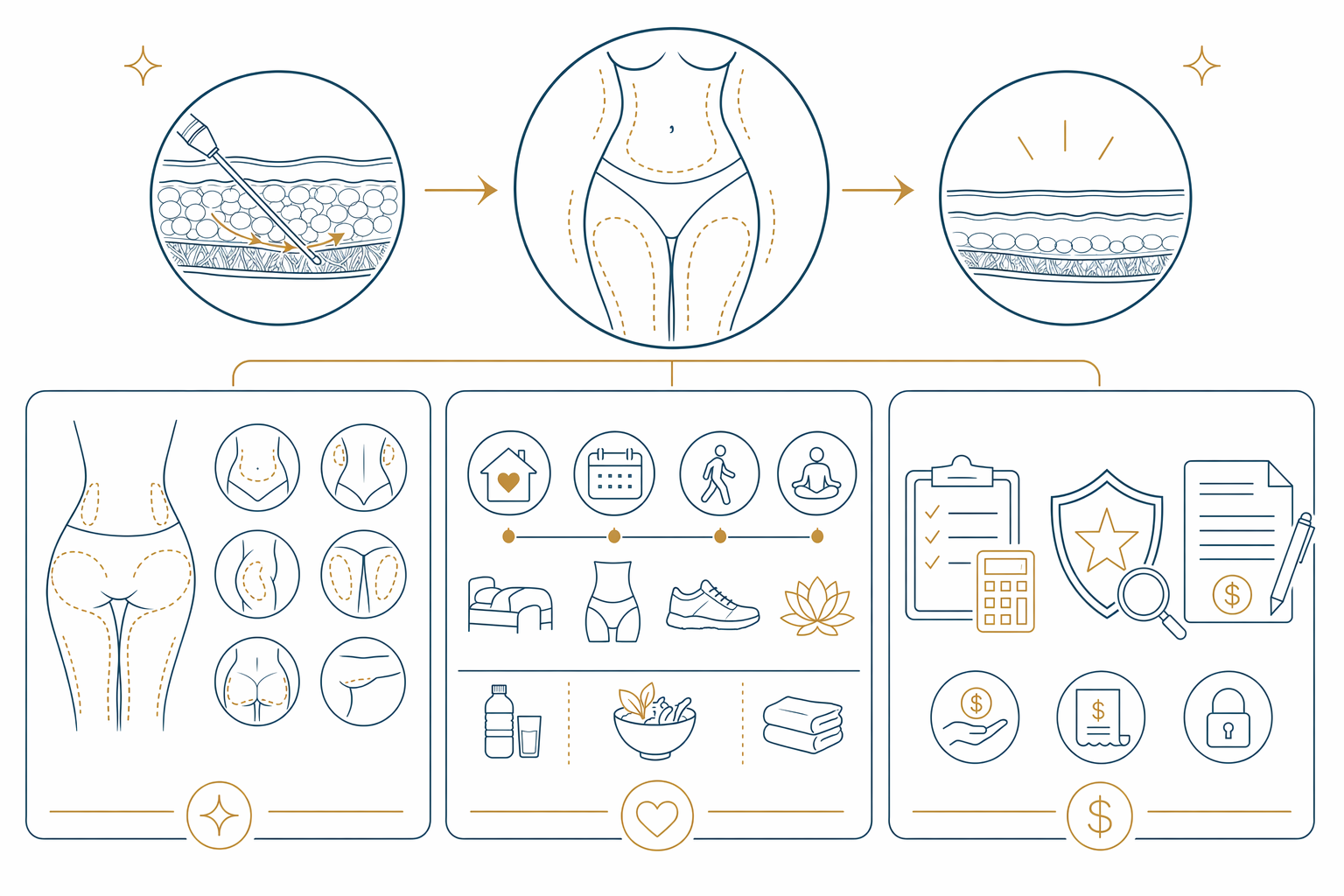
What liposuction is
Liposuction is a cosmetic procedure that removes pockets of fat from specific areas of the body. Common treatment areas include the abdomen, waist, thighs, hips, upper arms, back, or under the chin. The goal is body contouring, not general weight loss.
A surgeon uses a thin tube called a cannula to remove fat through small incisions. Different surgeons may use different techniques or devices, but the basic idea is similar: remove fat from selected areas to change shape and proportion.
It helps to know what liposuction cannot do. It does not tighten skin the way some people expect, and it does not replace healthy habits. Whether someone is a reasonable candidate is a medical decision that should be made with a qualified physician during a consultation.

How the procedure usually works
The exact steps vary by surgeon, treatment area, and how much contouring is planned. In general, the surgeon marks the areas to be treated, uses anesthesia appropriate for the procedure, makes small incisions, and removes fat from the targeted areas.
Some procedures are done on one area only, while others combine several areas in the same session. Combining areas can change the total price, operating time, and recovery plan. It can also affect where the procedure is performed, such as an office-based surgical suite or an accredited surgery center.
This is a good reason to ask detailed questions in your consultation. You can review consultation questions ahead of time so you understand the proposed plan, what is included in the quote, and what kind of aftercare the surgeon expects.
What recovery is really like
Recovery after liposuction is usually gradual. Many people have swelling, soreness, bruising, and temporary numbness in the treated areas. A surgeon may recommend compression garments for a period of time. The first days are often the most uncomfortable, but the timeline varies from person to person.
Some people return to desk work within several days to about two weeks, depending on the extent of the procedure and the physical demands of their job. Strenuous exercise, lifting, and full activity may take longer. It is common for swelling to improve slowly over weeks or months.
Because recovery can affect work, child care, travel, and daily routines, ask for practical details before you schedule. Ask when you may shower, drive, return to work, exercise, and travel. Also ask who to contact if you have questions after the procedure.
Only a qualified physician can advise you about risks, recovery, and whether liposuction is appropriate for you. ClariSurge does not provide medical advice. We offer general educational information and can help you connect with a board-certified surgeon for a consultation.
Self-pay liposuction cost: typical ranges
Liposuction is usually a self-pay cosmetic procedure. The total price often depends on the number of areas treated, the surgeon's experience, the location of the practice, the type of anesthesia, facility fees, garments, and follow-up care.
A single small area may sometimes start in the low thousands, while multiple areas can cost several thousand dollars more. In many US markets, self-pay liposuction often falls somewhere around $3,000 to $12,000+, but quotes can be higher depending on the plan. This is a general range, not a promise or a price list.
When comparing prices, ask for the full self-pay quote in writing. Confirm exactly what is included and what may cost extra. For example, ask about surgeon fees, anesthesia, facility fees, compression garments, prescriptions, lab work if required by the surgeon, and follow-up visits. You can also review our general costs guide for more context on cosmetic procedure pricing.
If someone asks about insurance, the simple answer is that ClariSurge focuses only on self-pay elective and cosmetic procedures. We do not help with insurance-covered or medically necessary surgery.
How to choose a surgeon carefully
Choosing a surgeon is one of the most important parts of the process. Look for clear communication, a professional setting, and written information you can review at your own pace. Do not feel rushed.
Always verify the surgeon's board certification yourself before moving forward. Our guide on how to check board certification can help you do that. You should also confirm where the procedure would take place and whether the facility is appropriately accredited.
During the consultation, ask how often the surgeon performs liposuction, which areas they commonly treat, what recovery restrictions they usually discuss, and what costs are included in the written quote. Make medical decisions with a qualified physician, based on your own goals, questions, and comfort level.
How ClariSurge can help
ClariSurge is not a medical practice, hospital, or surgeon. We do not diagnose, treat, or give medical advice. We provide general educational information about self-pay elective and cosmetic procedures, and we help people connect with a board-certified surgeon for a consultation.
Our service is free for readers. We collect contact details only so we can help with the connection process. We do not collect your medical history, diagnosis, or health records.
If you want to take the next step, you can get matched with a board-certified surgeon in our network. Before scheduling any procedure, verify board certification yourself and confirm the full self-pay price in writing.
Liposuction can reshape specific areas, but it has real recovery time and real costs, so verify the surgeon's board certification and get the full self-pay price in writing.
Common questions
Is liposuction a weight-loss procedure?
No. Liposuction is generally described as a body contouring procedure for selected fat deposits, not a general weight-loss method. Whether it is appropriate for you is a medical decision to discuss with a qualified physician.
How long does liposuction recovery take?
Recovery varies by person and by how much was treated. Many people need several days to two weeks before returning to lighter routines, while swelling and other changes may continue to improve over a longer period.
How much does liposuction usually cost?
Self-pay liposuction often ranges from about $3,000 to $12,000+ in the US, depending on the areas treated, the setting, anesthesia, and other fees. Always ask for the full self-pay quote in writing before scheduling.
Does ClariSurge give medical advice or collect my health records?
No. ClariSurge is not a healthcare provider and does not give medical advice. We collect contact details only so we can help connect you with a board-certified surgeon for a consultation.
Will insurance cover liposuction?
ClariSurge focuses only on self-pay elective and cosmetic procedures. We do not help with insurance-covered or medically necessary surgery.
How do I know if a surgeon is really board-certified?
Verify it yourself before moving forward. You can use our [check board certification guide](/guides/check-board-certification/) to understand what to look for and how to confirm credentials.